
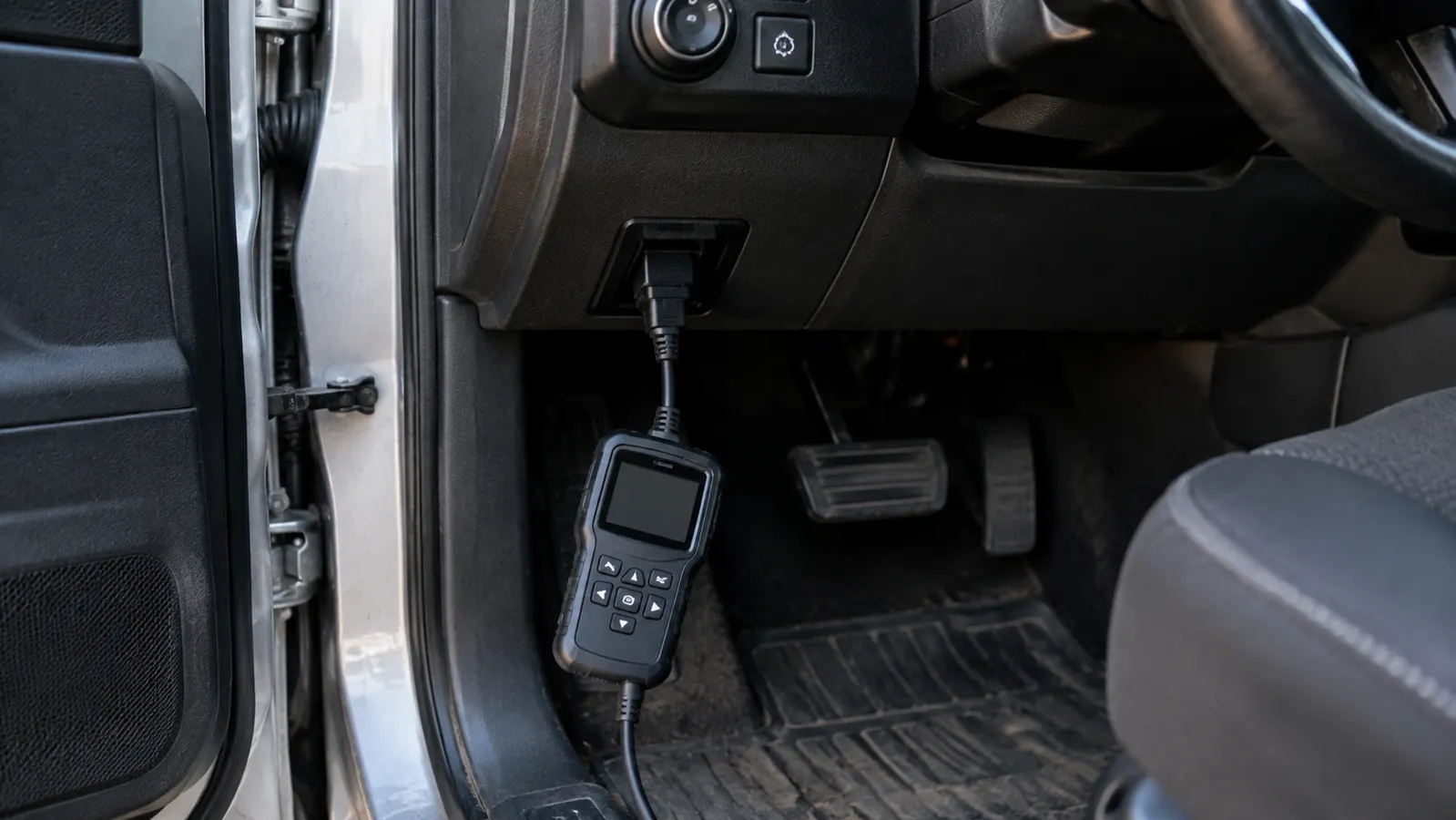
If you do your own wrenching, you already know the feeling. The check engine light comes on, and you have two choices: pay a shop to tell you what is wrong, or figure it out yourself. I have been doing my own work for thirty years, and I have owned more code readers than I care to count. When people ask me what to buy first, the two names that come up most are the ANCEL AD310 and the BlueDriver. One is a basic, inexpensive code reader that fits in your pocket. The other is a pricier Bluetooth scan tool that turns your phone into a full diagnostic screen. I ran both on my 2014 F-150 and my wife Carol's 2017 CR-V for a few weeks, and I can tell you exactly where each one shines and where it falls short.
The short answer: if you just want to read and clear a code so you can decide whether to fix it yourself or take it in, the ANCEL AD310 is the better buy. If you want live data, freeze frame data, and the ability to watch sensor readings while you diagnose an intermittent problem, the BlueDriver is worth the extra money. Most people only need the first one. Here is the full breakdown.
Before I get into it, a word on how I compared them. Both tools spent the same stretch of months in my garage, and both got plugged into the same two vehicles: my 2014 F-150 with a little over 190,000 miles on it, and Carol's 2017 CR-V. I did not run a lab test. I used them the way you would, when a light came on, when something felt off, and when I wanted to check a vehicle before a long drive. I kept a notebook on the tool chest and wrote down what each tool told me and whether that turned out to be the real problem.
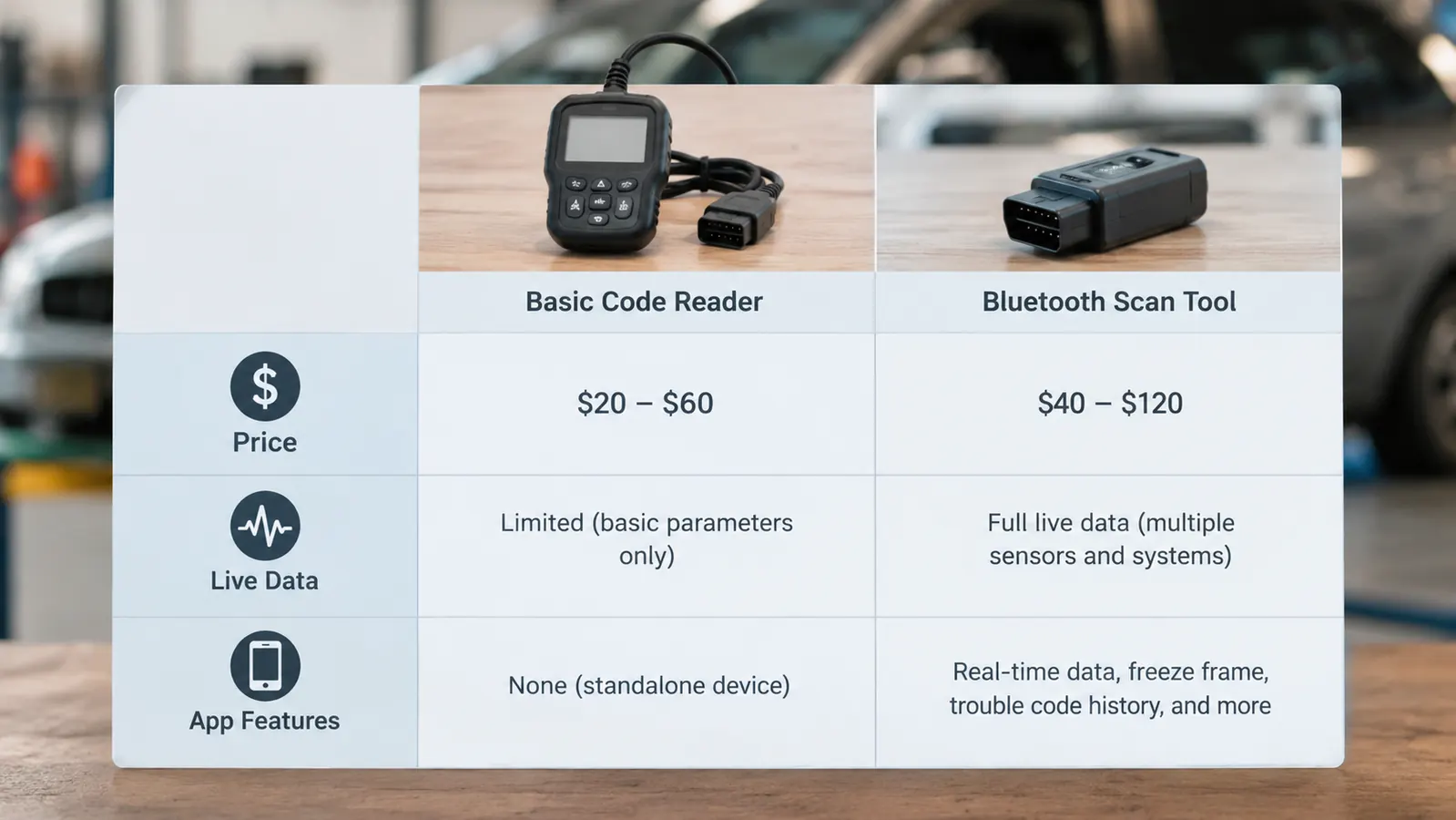
| ANCEL AD310 | BlueDriver | |
|---|---|---|
| Price | Low cost, cheap enough to keep in every vehicle you own | Several times the price of a basic reader |
| Setup | Plug into the port, turn the key, read the code on the built-in screen | Plug in, pair with a phone app, create an account, wait for updates |
| Live data | None. It reads and clears codes only | Full live data stream: coolant temp, RPM, fuel trims, O2 sensors, and more |
| Freeze frame data | Shows the code but not the conditions when it was set | Records engine conditions at the moment the code was set |
| App and updates | No app, no updates needed, works forever out of the box | Phone app required, and the app is the whole experience |
| Best for | Quick diagnosis, clearing a code, deciding if you can fix it yourself | Intermittent problems, sensor monitoring, DIYers who want data |
Where the ANCEL AD310 Wins
The ANCEL AD310 wins on price, plain and simple. It costs less than a single trip to a shop for a diagnostic scan. I have bought code readers that cost more than this and did less. The AD310 reads and clears generic powertrain codes on any 1996 or newer vehicle that speaks OBD2, which is every car and light truck sold in the US for the last twenty-five years. It has a small screen that shows the code, a short description, and whether the code is pending or confirmed. That is enough to tell you whether the problem is a loose gas cap or a failing oxygen sensor.
It is also dead simple to use. You plug it into the diagnostic port under the dash, turn the key to the run position, and wait a few seconds. The screen lights up with the code. No phone, no app, no account, no firmware update. I keep one in the glove box of the F-150 and one in the CR-V, because at that price there is no reason not to. When Carol's CR-V threw a P0420 code last month, I grabbed the AD310, read the code in the driveway, and knew I had a catalytic converter efficiency problem to investigate. That single read saved me the fee a shop would have charged just to plug in their own scanner.
The AD310 also clears codes, which sounds obvious but matters more than you think. When you fix a problem, you want to clear the code and see if it comes back. The AD310 does that with two button presses. I have used it to clear a code after replacing an oxygen sensor, then driven a week to confirm the fix actually worked. For that workflow, the ANCEL AD310 is all you need.
Here is the scene that sums up the ANCEL AD310 for me. It was a Tuesday evening in late fall, the CR-V threw a light on the way home from the grocery store, and Carol was worried it meant something expensive. I walked out to the driveway with the AD310, plugged it in, and had a code on the screen before the engine fan had even stopped running. It was an evaporative emissions code, the kind that very often comes back to a gas cap that did not click shut. I tightened the cap, cleared the code, and told her to drive it normally for a few days. The light stayed off. Total time was maybe four minutes, and there was no phone, no app, no account, no battery to charge.
That simplicity is not a small thing. I have helped neighbors with their vehicles for years, and the ones who are least comfortable with tools are the ones who most need a code reader. Hand someone the ANCEL AD310 and the instructions fit on a sticky note: plug it in, turn the key, press read. Hand them a Bluetooth tool and you are first walking them through downloading an app, pairing the dongle, and figuring out which screen the code is on. For a lot of people that is the point where they give up and call the shop.
The AD310 also lives happily in a glove box. It does not care if it sits for six months in the cold, and it powers itself from the diagnostic port, so there is nothing to keep charged. I keep one in the F-150 and I have stopped thinking about it, which is exactly how a tool like this should work.
Need a code reader that just works, for less than a shop visit?
The ANCEL AD310 reads and clears OBD2 codes on any 1996 or newer vehicle. No app, no account, no learning curve. I keep one in each of my vehicles.
Amazon Check Today's Price on Amazon →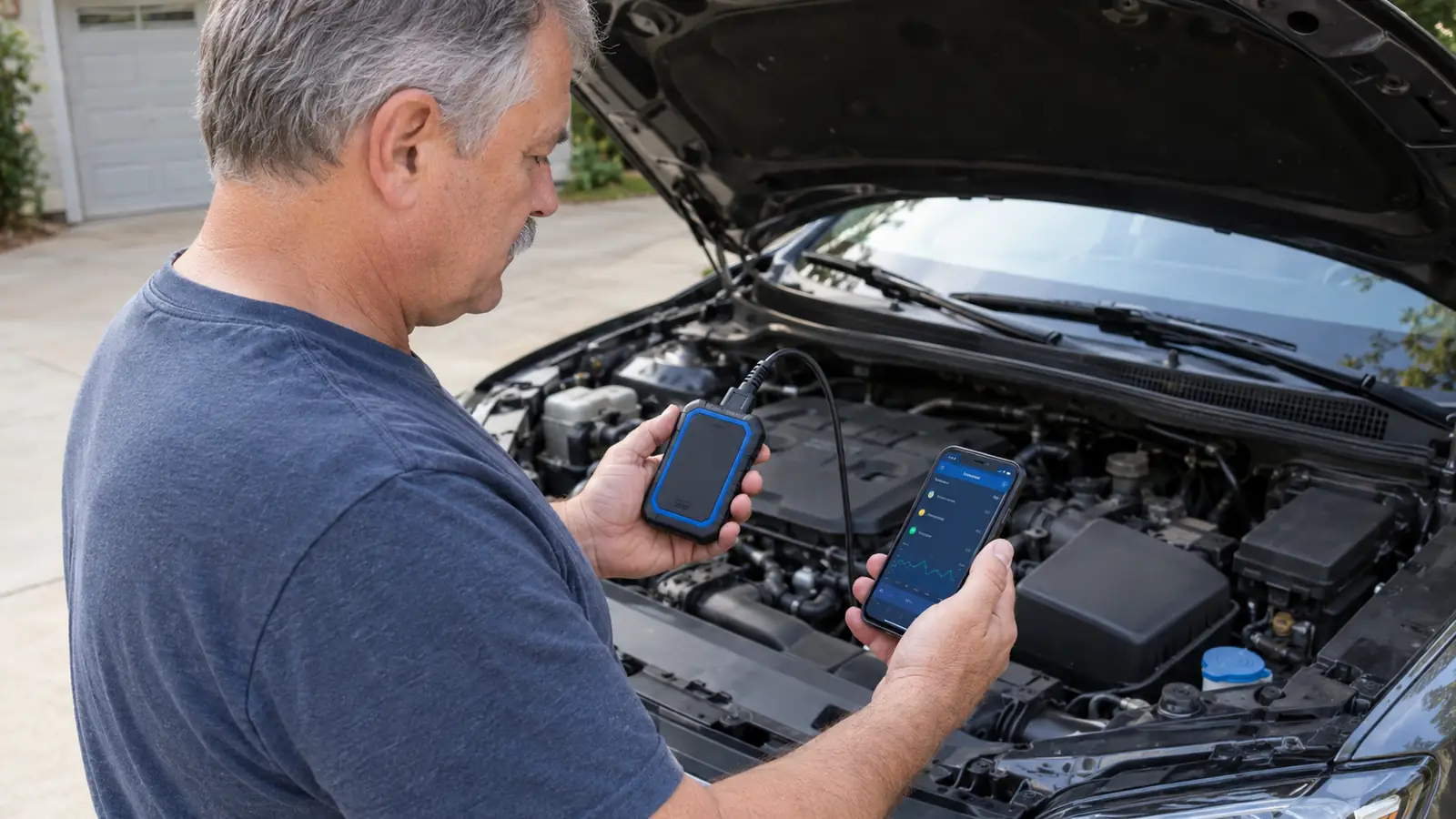
Where BlueDriver Wins
The BlueDriver wins when you need to see what the engine is doing, not just what code it threw. It connects to your phone over Bluetooth and shows live data from the engine computer: coolant temperature, engine RPM, calculated load, fuel trims, oxygen sensor voltages, and more. That is the difference between knowing you have a P0171 code and knowing that your long-term fuel trim is pegged at +25 percent, which tells you the engine is running lean and where to start looking.
I used the BlueDriver on the F-150 when it developed a rough idle that did not set a code. The truck would idle fine cold, then start stumbling after a few minutes. A basic code reader would have shown nothing, because there was no code. With the BlueDriver, I watched the coolant temperature climb on the live data screen and saw the idle RPM start hunting as the engine came up to temp. That pointed me to the idle air control valve, which I cleaned and the problem went away. The AD310 could not have done that, because it has no live data mode at all.
The BlueDriver also records freeze frame data, which is a snapshot of engine conditions at the exact moment a code was set. That is genuinely useful for intermittent problems. If a code sets only when the engine is hot and under load, the freeze frame will show you the coolant temperature and RPM at that moment. The AD310 just shows the code. For a DIYer chasing an intermittent misfire or an evap leak, that data is worth the price difference by itself.
The BlueDriver also saves your scan history in the app, so you can look back at what a vehicle threw last spring and compare it to what it throws today. If you keep records the way I do, that is genuinely useful, and it is something a basic handheld simply does not do. You can also pull up a repair report for many codes that lists the fixes other owners have reported, which is a reasonable starting point as long as you treat it as a hint rather than a diagnosis.
The tradeoff is that all of that depends on your phone. The first time I went to use the BlueDriver in the driveway my phone was at ten percent, and the second time the app wanted an update before it would connect. Neither was a disaster, but both times I was standing there with a warning light on and no answer, which is exactly when you want a tool that just works. If you are the kind of person who always has a charged phone and enjoys digging into data, none of this will bother you. If you are not, it will.
Who Should Buy Which
Buy the ANCEL AD310 if you want to know why the check engine light is on, clear the code after a fix, and decide whether the job is something you can do in the driveway. It is the right tool for the vast majority of people, and at its price you can own one for every vehicle you have. It is also the right tool if you are new to working on cars and do not want to learn an app just to read a code.
Buy the BlueDriver if you are already comfortable with diagnostics and you find yourself chasing problems that do not set codes, or codes that come and go. The live data and freeze frame data turn a guess into a plan. It costs more, but it replaces a lot of trial and error. If you are on the fence, my honest advice is to start with the ANCEL AD310. It will handle most of what you need, and if you outgrow it, the BlueDriver will still be there when you are ready.
If you are still on the fence, ask yourself one question: when the light comes on, what do you do next? If the answer is look up the code, tighten the cap or replace the obvious part, and move on, the ANCEL AD310 covers that completely and you will never miss the extra features. If the answer is that you want to watch sensor readings while the engine runs and track down an intermittent problem over several days, that is the job the BlueDriver was built for.
For most of the people who read this site, and for me on most days, the first answer is the honest one. That is why the ANCEL AD310 is the one that stays in my truck, and the one I would hand to a friend who just wants to stop guessing every time a light comes on. Whichever you choose, remember that a code tells you what the computer noticed, not always which part failed, so check the simple things first before you start buying parts.
Start with the cheap one, like I did
The ANCEL AD310 reads and clears codes on any 1996 or newer vehicle. It is the cheapest diagnostic tool you will ever buy, and it pays for itself the first time you use it.
Amazon Check Today's Price on Amazon →