
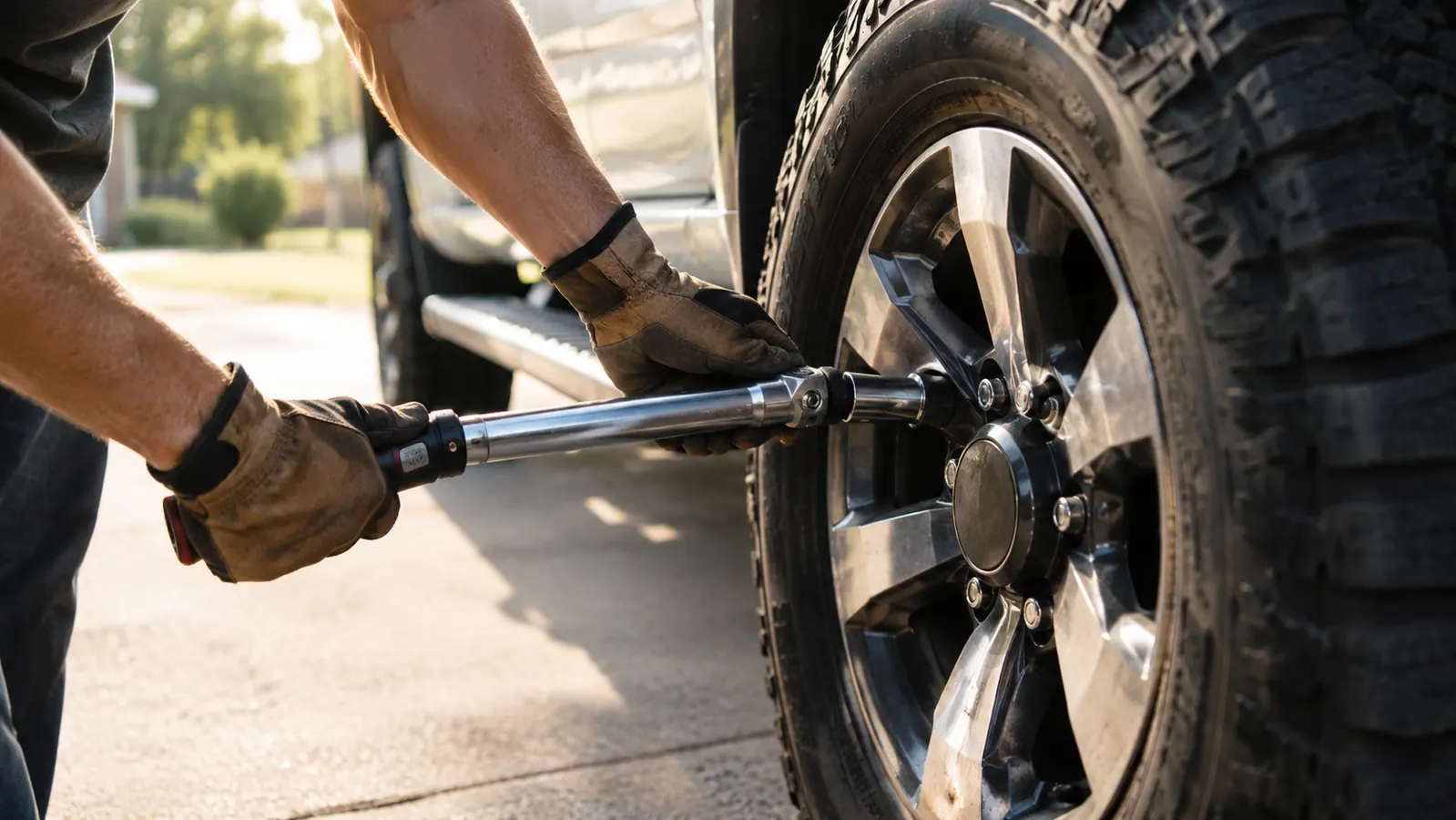
Look, I'll say it up front so you can decide whether to keep reading. Between the EPAuto 1/2-inch drive click torque wrench and the LEXIVON 1/2-inch drive click torque wrench, I'd buy the EPAuto for my own garage, and I'd hand the LEXIVON to a working mechanic who wants a slightly nicer feel in the hand every day. Both do the same job. Both click when you hit the number you set. Both keep you from guessing how tight a bolt needs to be. The differences are in the details, and in how much those details matter to you.
The short answer, if you want it even shorter, is this. The EPAuto is the better value, and it has the track record to prove it, with 23,720 ratings behind it. The LEXIVON is the nicer tool. If I could only keep one wrench in my box, I'd keep the EPAuto, because it does everything I ask of it and leaves me money for sockets. If you make your living with a torque wrench, the LEXIVON's feel might be worth the extra to you. That's the whole argument. Now let me show you why I landed there, because it took a warped rotor and a wasted Saturday to teach me what actually matters.
Why You Need a Torque Wrench in the First Place
I came to torque wrenches the hard way. Back before I knew better, I'd put the wheels back on my 2014 F-150 and just reef on the lug nuts with a four-way, the way my old man did. That worked fine until it didn't. One fall I overtorqued the front lugs so hard that the rotors warped. The truck pulsed every time I touched the brakes, and I got to buy new rotors and pads and spend a Saturday with the truck up on jack stands to fix what my own elbow had done.
The fix for that kind of mistake isn't a stronger arm. It's a number. Every fastener on your truck has a torque spec written in the manual, and a click-style wrench lets you hit that number instead of guessing at it. Once you own one, you'll find yourself using it for more than wheels. Brake caliper brackets, control arms, oil drain plugs, spark plugs, the lug nuts on Carol's CR-V. A click wrench is one of those tools that looks like a luxury until the day it saves you a repair bill.
How I Tested Both Wrenches
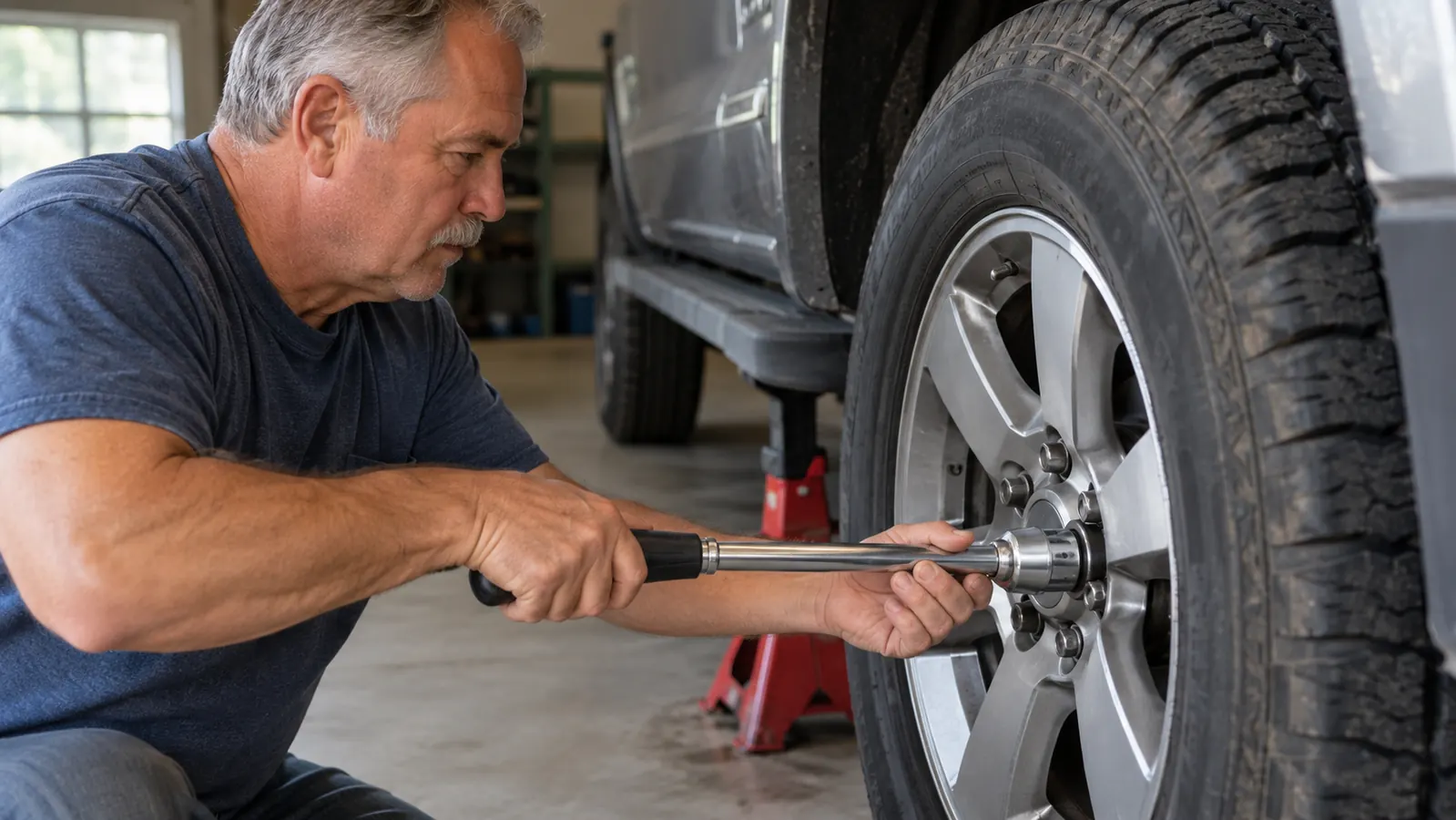
I tested both wrenches the way I actually work, which is to say on a dirty garage floor with the pickup up on jack stands. I set each wrench to the same number, 100 foot-pounds, which is the spec I use for the F-150's lug nuts, then torqued all five lugs on one wheel, reset the wrench, and went around again to confirm every fastener clicked at the same effort. I did that three times with each tool, on both the truck and the SUV, and I swapped them mid-job so the conditions were identical.
Beyond the basic test, I paid attention to the things that don't show up in a spec sheet. How easy the collar is to grip when your hands are greasy. How clearly the click comes through when you're lying under the car. Whether the scale is readable in bad light. Whether the case keeps the wrench from knocking around in the bed of the pickup. And I checked the paperwork, the accuracy claims, and the warranty each one carries, because a torque wrench is a measuring tool, and a measuring tool is only as good as its repeatability.
One more thing before we get to the table. I did not send either wrench to a lab, and I did not put a digital torque adapter on them, because I don't own one and most of you don't either. What I can tell you is that both wrenches agreed with each other within a few foot-pounds on every fastener, and both clicked consistently job after job. For driveway work, that's the test that matters.
What I Checked Before I Trusted Either Wrench
Before I put either wrench to real work, I went through the checklist I'd give anybody buying their first torque wrench. First, the range. The EPAuto covers 10 to 150 foot-pounds, and the LEXIVON covers the same span. That handles every fastener I touch on the F-150 and the CR-V, from the oil drain plug at the low end to the axle nut up top. Second, the click. A click wrench should stay silent until it reaches the set number, then give you a snap you can feel and hear. Both of these do that. Third, the reset. When you turn the collar back to zero, the mechanism should move smooth, not crunchy, because a crunchy adjuster is a sign of cheap internals.
The other thing I checked is the one most people skip, the calibration paperwork and the accuracy rating. Both wrenches ship with the usual plus or minus 4 percent claim, which is standard for this class of tool, and both came with paperwork saying they were checked at the factory. That matters, because a torque wrench is the one tool in your box you cannot calibrate by feel. You either trust the click or you don't. After a few weeks of use, and a lot of lug nuts torqued at the same setting, I trusted both of them.
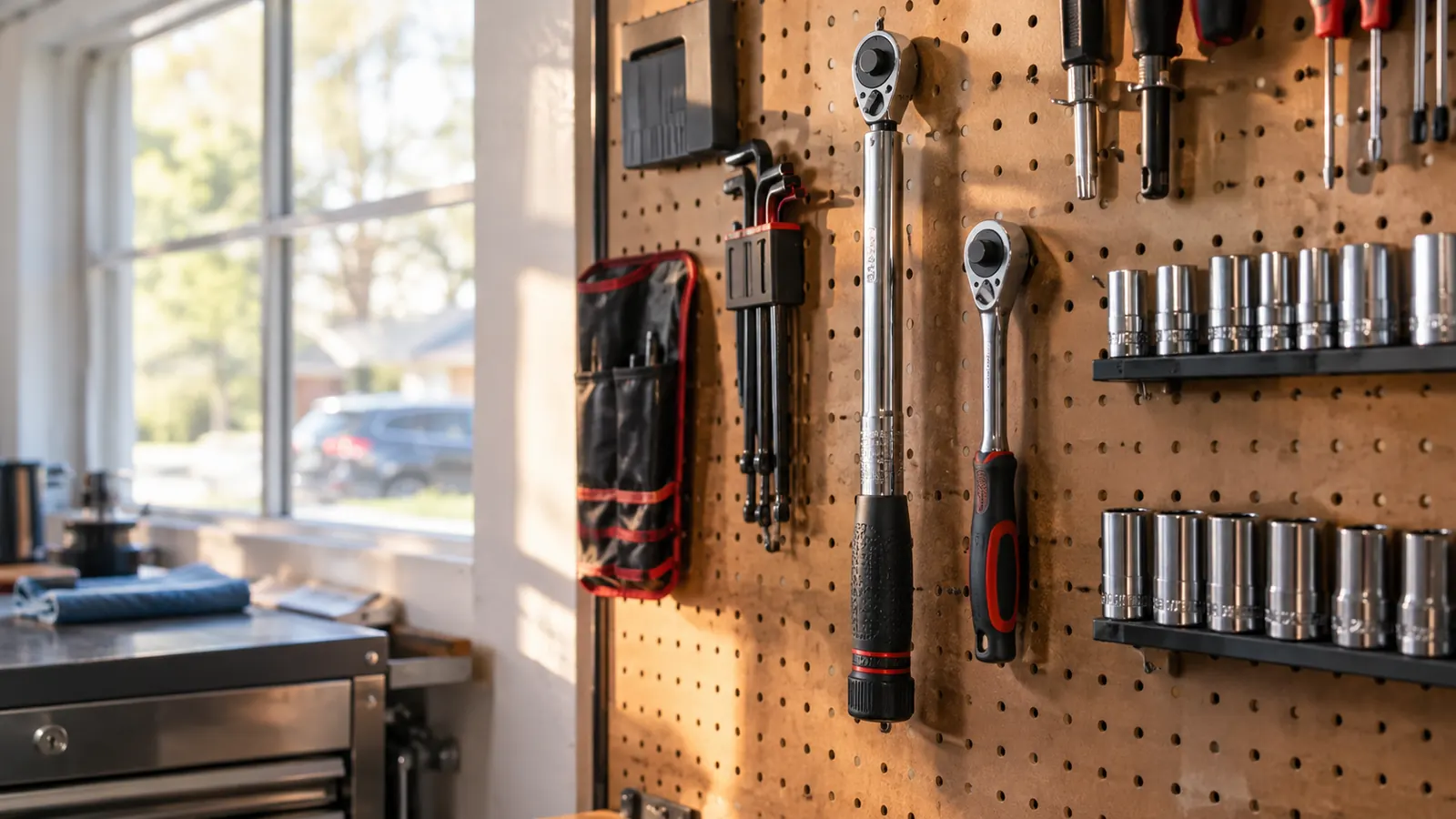
One last check, and it's the one that catches most people off guard. A torque wrench is not a breaker bar. It is not for cracking a rusted lug nut loose. It is for tightening to a precise number, and nothing else. If you use it to break fasteners free, you'll knock the calibration out of it and never know. Both of these wrenches go back in their cases after use, and both cases live on the shelf, not on the floor of the truck bed, because a dropped torque wrench is a torque wrench you can't trust.
The Two Wrenches, Side by Side
Here's the honest breakdown. I split the table into the categories that actually decided things for me, and I called a winner on every row. Where it's a tie, I say it's a tie. That's the deal.
| EPAuto | LEXIVON | |
|---|---|---|
| Price and value | Costs less up front, and the savings cover a set of sockets. | Costs a bit more for the same torque range and accuracy. |
| Accuracy | Claims the usual plus or minus 4 percent, same as most click wrenches. | Same claimed accuracy class, nothing to split. |
| Build and feel | Solid feel and a clear scale, no complaints. | Machining feels a step cleaner and the handle has a finer knurl. |
| Click feedback | Clear enough click, easy to feel and hear in the garage. | Slightly crisper click with a softer, more defined stop. |
| Community track record | 23,720 ratings on Amazon with a 4.6 average. | Strong ratings too, but a smaller crowd behind it. |
| Storage case | Molded case that keeps the wrench and the manual together. | Molded case of similar quality. |
| Best for | Home garage and driveway work where value matters most. | Daily professional use where hand feel earns its keep. |
If you read that table and squinted, here's what it boils down to. On the things that matter to a driveway mechanic, the value, the track record, and the range, the EPAuto takes it. On the things that matter to a professional who lives with the tool, the machining and the click, the LEXIVON takes it. Everything else is a wash. That's an honest split, and it's why I don't think you can go wrong either way. You're just picking which tradeoff you'd rather live with.
Where EPAuto Wins
The biggest thing the EPAuto has going for it is the price. It costs less than the LEXIVON for the same torque range, the same 1/2-inch drive, the same click mechanism, and the same claimed accuracy. Nobody needs a sermon about value. A torque wrench is not a status symbol. It's a measuring tool, and the EPAuto measures every bit as well for less money. The savings are the kind that let you buy a second wrench in a different size, or a decent torque adapter for your ratchet.
The other thing that wins me over is the track record. The EPAuto has 23,720 ratings on Amazon and a 4.6 average. That's a lot of people doing the same job I do and agreeing that this wrench works. When a tool has that many owners behind it and the average still sits that high, I trust it in a way I can't trust a brand-new design. LEXIVON has its own loyal crowd, and I'm not knocking them. But the EPAuto's numbers are the kind of proof you can't argue with.
Where LEXIVON Wins
I have to give the LEXIVON its due. The build quality is a half step above, and you can feel it the first time you pick it up. The machining is cleaner, the knurling on the handle is finer, and the whole tool just feels more precise in the hand. If you're the kind of person who notices the difference between a good tool and a great one, you'll notice it here. For a home garage guy like me, that's a nice-to-have. For someone who reaches for the wrench every single day, it might be the whole ballgame.
The LEXIVON also has a slightly crisper click, with a softer stop at the end. That sounds like a small thing until you're under the truck in bad light torquing a caliper bracket and you can't see the scale. The feedback through the handle is just a little more distinct, and the collar releases smoother when you reset it. None of that changes the number it delivers. But it does change how the tool feels to use, and for a lot of mechanics, feel is worth paying for.
Stop Guessing at Lug Nut Torque. Start Torquing to the Number.
The EPAuto 1/2-inch drive click torque wrench covers 10 to 150 foot-pounds, which is the whole range you need on a pickup or an SUV. 23,720 owners rate it 4.6 stars. Check today's price on Amazon and see why it's the wrench I reach for first.
Amazon Check Today's Price on Amazon →Who Should Buy Which
Buy the EPAuto if you're working on your own vehicles in your own driveway, the way I do. If you need one solid torque wrench for lug nuts, brake work, and suspension bolts, and you'd rather spend the difference on a socket set or a breaker bar, the EPAuto is the easy call. It has the range for everything on the F-150 and the CR-V, the ratings to back it up, and a price that doesn't make you wince when you drop it on the concrete.
Buy the LEXIVON if you use a torque wrench all day and the feel of the tool in your hand genuinely matters to you. If you're a working mechanic, or you torque fasteners so often that the crisper click and the finer knurl pay for themselves in comfort, the LEXIVON is worth the extra money. There is no wrong answer between these two. It's a question of whether you want the best value or the best feel, and only you know which one you'll appreciate more.
Me, I keep the EPAuto in my box, and I've torqued every wheel on the truck and the SUV with it since the day it arrived. If it ever lets me down, I'll tell you about it, because you deserve the truth. But after six months of regular use, it hasn't missed a click yet. That's the whole review in one sentence. It does the job, it does it consistently, and it leaves me money for the next project.
My Pick for the Home Garage
The EPAuto 1/2-inch drive click torque wrench does everything I ask of it, and 23,720 owners say the same. Check today's price on Amazon and keep the change for the rest of your tool list.
Amazon Check Today's Price on Amazon →