
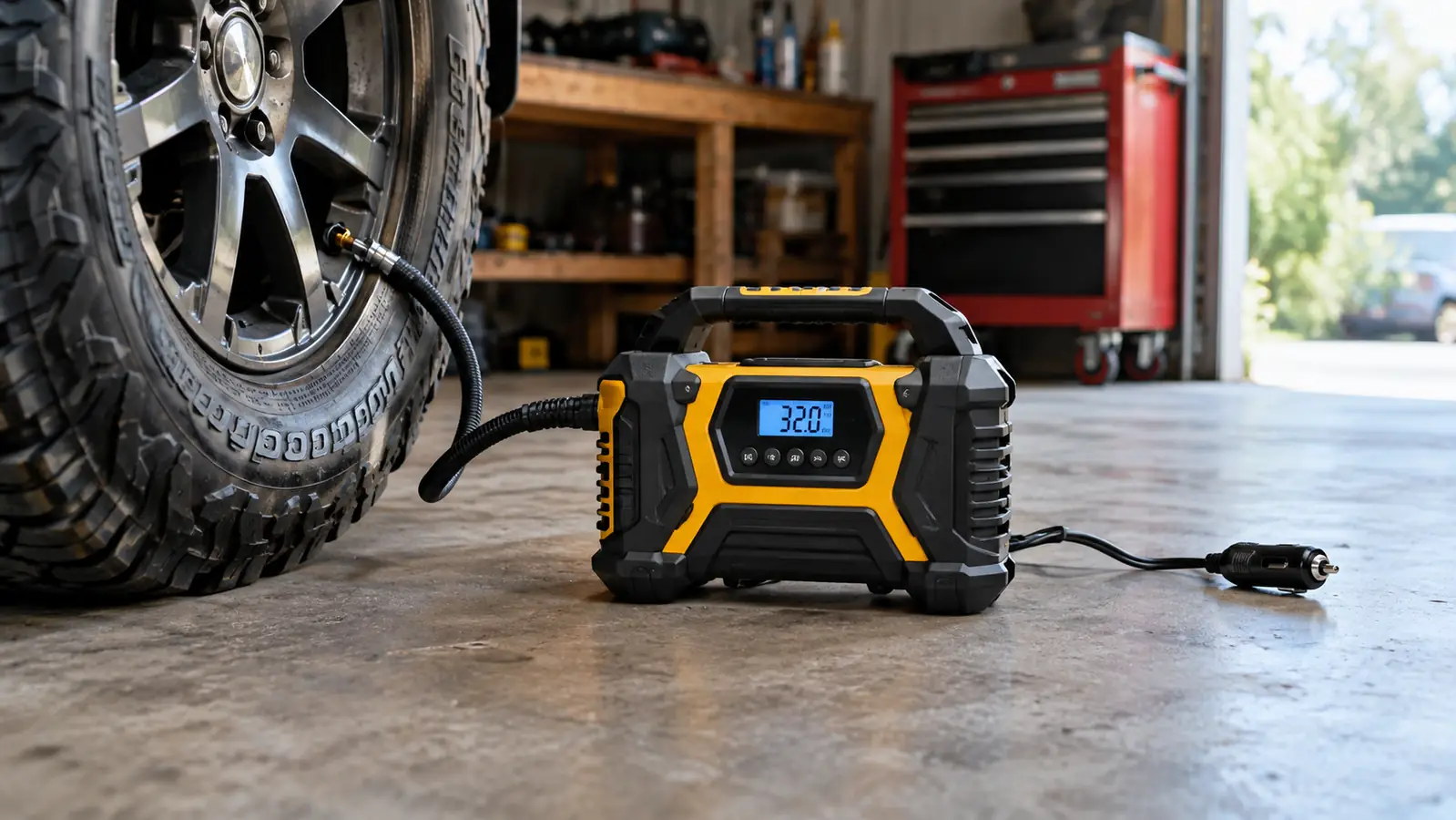
I have owned the AstroAI AIRUN H for about eight months now, and I want to give you the honest version of what it is like to live with. Most reviews read like the box copy, so here is the part nobody tells you: it is louder than you expect, the auto shut-off is not as automatic as the name suggests, and the 9.8-foot cord will make you park in a weird spot more than once. I am Walt, I have been turning wrenches in my own garage for thirty years, and I bought this inflator to keep in the bed of my 2014 F-150. It has topped off a lot of tires since then, and it has also taught me a few things about what a cheap 12V compressor will and will not do. If you are trying to decide whether this is the inflator for you, here is what I wish someone had told me before I ordered it.
The Quick Verdict
A genuinely useful 12V inflator for topping off car and SUV tires, with a few honest compromises around noise, cord length, and the auto shut-off that you should know about before you buy.
Amazon Check Today's Price →The inflator I keep in my truck bed for topping off tires
After eight months of use, the AstroAI AIRUN H is the first thing I grab when a tire looks low. It is not perfect, but it is dependable, and it has never left me stranded.
Amazon Check Today's Price on Amazon →How I Have Used It
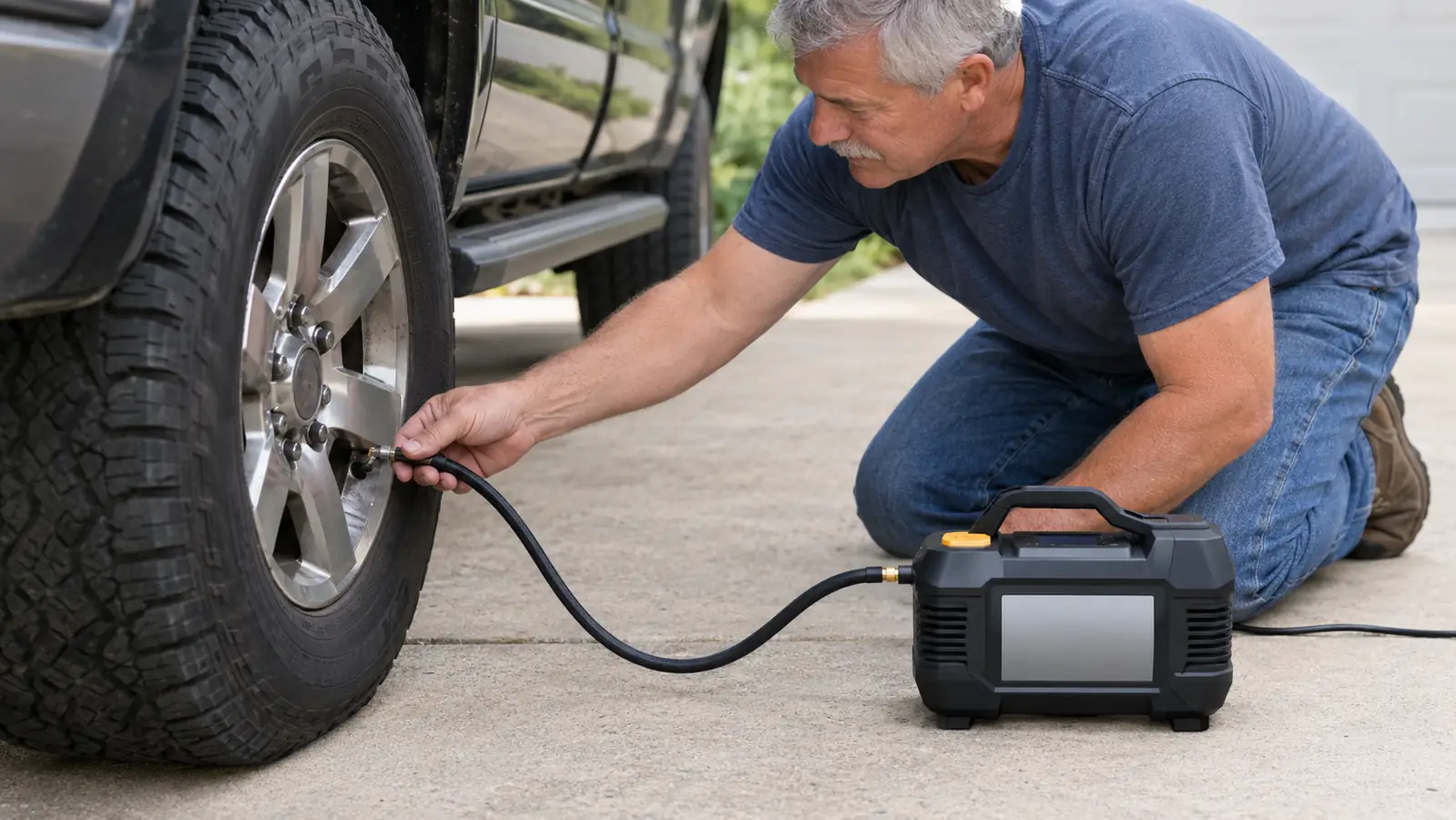
My routine is simple. Every couple of weeks I check the pressures on my F-150 and on Carol's CR-V, and the AstroAI AIRUN H does the topping off. One morning in early March I found the front passenger tire on the F-150 down to 24 psi. It had been a slow leak from a nail I had not bothered to fix yet. I pulled the AstroAI AIRUN H out of the bed, set the target to 35 psi, and let it run while I checked the other three tires with my pencil gauge. By the time I had finished walking around the truck, it had shut itself off and the gauge read 35.5. That is the kind of everyday job this thing is actually for, and it does that job without drama.
The 9.8-foot cord is the other thing to know. It reaches from the 12V outlet in my truck to the rear tires without a problem, but it does not reach the front tires if I park nose-in. I have gotten into the habit of pulling in far enough that the cord reaches, or I back in instead. Wait, I should be more careful with the numbers here. The power cord is 9.8 feet, and the air hose is separate and shorter, maybe two feet. The unit has to sit close to the tire, so the cord has to do all the reaching. On a crew cab truck, that means the front tires are right at the edge of what it can do. I have learned to park with the front bumper just past the garage door opening, and I route the cord through the back window so it does not pinch in the door. It is a small dance, but you do it once and you remember it.
I have also used it after patching a tire, before a long trip, and once to bring a neighbor's trailer tire back from what looked like 15 psi. He came over one Saturday afternoon with a 12-foot utility trailer that had been sitting all winter, and the tire looked almost flat. The AstroAI AIRUN H brought it up to 50 psi, which is what the sidewall calls for, and it took about six minutes. The compressor was warm when it finished, but not hot, and it shut off right at 50. He asked where I got it, and I told him the honest version: it is loud, it overshoots a little, and you have to set the target before you start. He ordered one that night.
Speed: What It Will and Will Not Do
The AstroAI AIRUN H is not a shop compressor. It is a portable 12V unit, and it behaves like one. On a completely flat car tire, it will take a while. On a tire that is just low, it is quick. I topped off all four tires on the CR-V one morning, each down about 6 psi, and the whole job took maybe ten minutes including setup. That is the realistic use case for this thing.
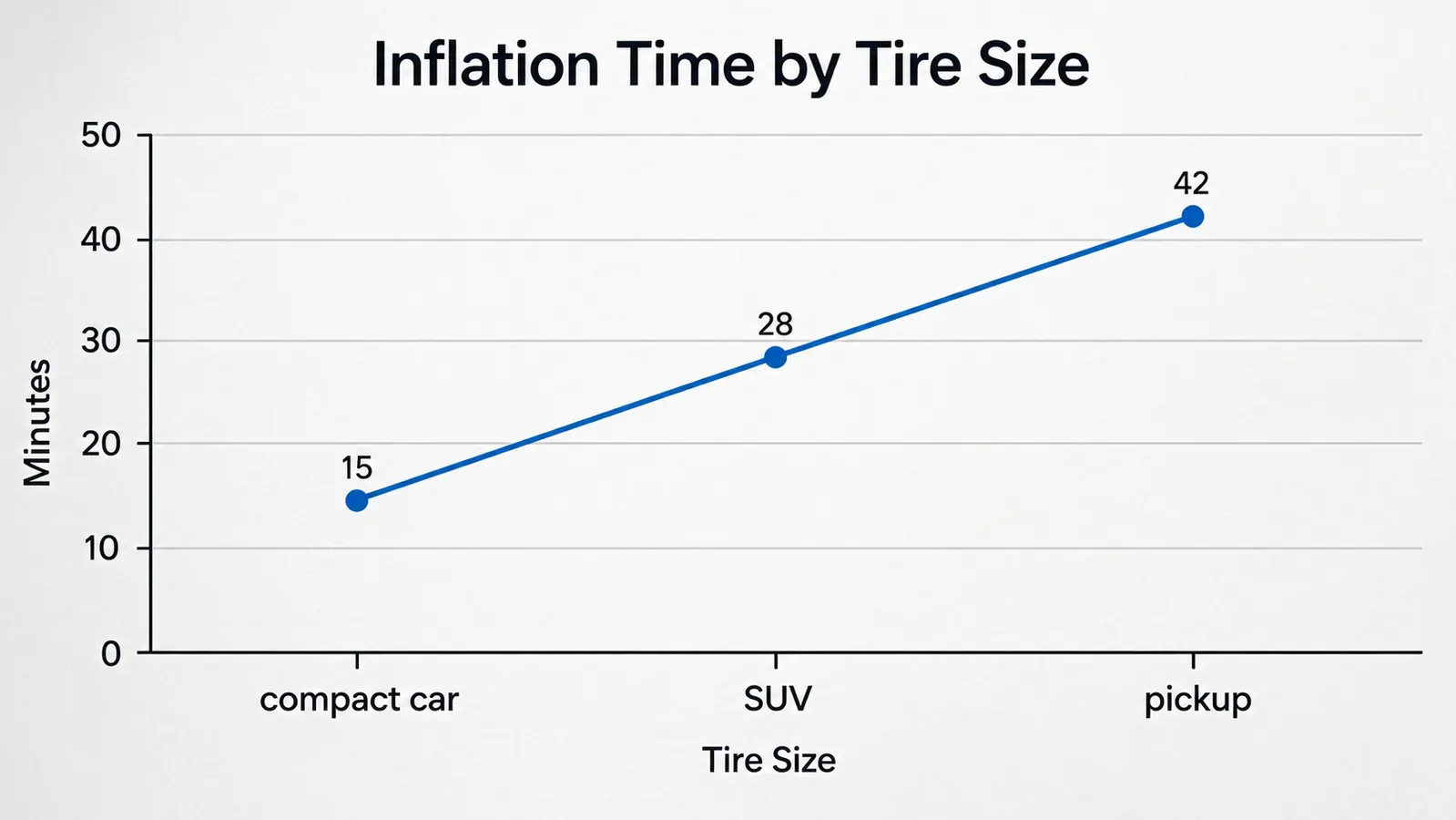
Where it struggles is the big stuff. Filling a 265/70R17 truck tire from flat to 35 psi took me close to nine minutes, and the compressor got hot enough that I let it cool before I put it away. I checked the temperature with the back of my hand, and it was too warm to hold comfortably. The manual says not to run it for more than ten minutes at a stretch, and I believe it. I have also learned that a hot compressor fills slower, so the last few psi take longer than the first few. For a full-size pickup tire that is completely flat, this is an emergency tool, not a convenience. For topping off, it is great.
The digital gauge is accurate enough for my purposes. I checked it against a separate pencil gauge and a digital gauge from my toolbox, and it reads within about a pound. The display is backlit, which helps in the dark, and it shows the target and the current pressure at the same time. I set 35 psi, and I can watch the number climb. That is better than the analog gauges on some of the cheaper units I have owned, where the needle bounced around and I never quite trusted the reading. It is not a lab instrument, but it is honest enough for setting tire pressures, and that is all I ask of it.
The CR-V tires are 225/65R17, and the F-150 runs 265/70R17. That size difference shows up in inflation time. When Carol's tires are each down about 5 psi, the AstroAI AIRUN H takes maybe two and a half minutes per tire. When my truck tires are down the same amount, it takes closer to four. The compressor is doing noticeably more work, and you can hear it. I have started checking the truck tires first, while the battery is fresh, and doing the SUV tires after. It is not a scientific test, but it is how I actually use the thing.
Noise: The Part Nobody Mentions
This thing is loud. I do not mean loud like a shop compressor, I mean loud like a vacuum cleaner that is working hard. When it is running, you cannot have a conversation next to it, and you will not want to run it inside a closed garage. I use it outside, and I still wish I had ear protection when I am filling a tire from flat. It is not a dealbreaker, but it is the first thing I mention to anyone who asks about it.
The AstroAI AIRUN H is loud enough that I warn people before they borrow it, and the auto shut-off overshoots by about a pound on small tires. Both are manageable once you know they are coming.
The noise also tells you something useful. When the compressor is working hard, it gets higher pitched, and you can hear when it is struggling. That has saved me from running it too long on a stubborn tire. I listen for the pitch change, and I let it cool down. One time the pitch went up and the airflow seemed to drop, and I found the hose was kinked under the tire. I straightened it out, and the pitch came back down. It is a small thing, but it is the kind of thing you learn by using a tool, not by reading the box.
The first time I used it, I made the mistake of running it inside the garage with the door down. The echo bounced off the concrete floor and the walls, and Carol came out from the house to see what was going on. She stood at the door and said she could hear it from the kitchen. Now I pull the truck out of the garage before I fill anything, or I at least open the big door all the way. The noise is not a defect, it is just the nature of a small 12V compressor. The motor is working hard to move air, and it lets you know. I have had cheaper inflators that were just as loud and died after a year. I would rather have the noise and have it keep working.
Auto Shut-Off: The Catch
The auto shut-off is the headline feature, and it mostly works. You set the target pressure, and the compressor stops when it gets there. I have used it dozens of times, and it has never failed to stop. The catch is the overshoot I mentioned. On a car tire, a one-pound overshoot is nothing. On a bike tire or a motorcycle tire, it matters more. On the CR-V, which calls for 32 psi, I set 31 and let it land where it lands. That has worked well enough that I do not think about it anymore.
I have a specific memory of the day I forgot to set the target. It was a Sunday afternoon in April, and I was filling the rear tire on the CR-V after a trip. I clipped the hose on, turned the unit on, and walked back to the house to grab a cup of coffee. When I came back, the compressor was still running and the gauge was reading 44 psi on a tire that should be 32. I had not set the target, so the auto shut-off had nothing to stop at. That is the thing nobody tells you: the safety feature only works if you arm it. The unit does not default to a safe pressure. It defaults to running. I had to let the air back out with the valve stem and redo it. It took me two minutes to fix, and it has not happened since, because I now set the target before I even clip the hose on.
The other thing I have noticed is that the shut-off is less precise when the battery is low. One evening I ran it with the truck idling, and the compressor sounded a little slower and the gauge seemed to lag. The overshoot was closer to two pounds that night. I have started the truck before I use it when I am filling more than one tire, which keeps the voltage steady. It is the kind of detail that only shows up after you have owned the unit for a while.
Build Quality and the Little Things
The AstroAI AIRUN H feels better made than the price suggests. The housing is solid, the hose is decent, and the LED light is genuinely useful when you are changing a tire at night. I have dropped it once, and it survived. The cord is thick enough that I do not worry about it getting pinched in a door.
The included accessories are basic. You get a few nozzle adapters for balls and bike valves, and they work. The carry bag is thin, but it keeps the unit from rattling around in the bed of my truck. I would not trust it to survive being thrown around, but I do not throw my tools around.
The drop happened about three months in. I had the unit on the tailgate while I filled the spare tire, and it slid off onto the concrete. It landed on the corner of the housing, and I was sure I had cracked it. I picked it up, checked the case, and it was fine. The gauge still read correctly, and the hose connection did not leak. I have dropped it once, and it survived. I would not make a habit of it, but it tells you the plastic is not the brittle kind you find on the cheapest tools.
The LED light is genuinely useful. I have used it twice at night, once to check a tire on the side of the road and once to find a valve stem on Carol's CR-V in the dark. The light is bright enough to see what you are doing, and it turns on with a button on the side, separate from the compressor. I have also used it as a work light when I dropped a lug nut in the gravel. It is not a flashlight you would carry on a hike, but it is better than a phone light, and it is right there in the unit.
Who This Is For
This is for the person who wants a dependable way to top off tires at home, in the driveway, or on a trip. It is for the person who checks their pressures regularly and wants to do it without a trip to the gas station. It is for the person who has a car, a crossover, or a light truck, and who understands that a 12V inflator is a convenience tool, not a replacement for a real compressor. If that sounds like you, this unit will earn a permanent spot in your trunk or truck bed. The one time you need it will be the one time you are glad it is there.
Who Should Skip It
Skip it if you need to fill a full-size truck tire from flat on a regular basis. I did that once and then made sure I never had to again, because nine minutes of that noise is enough. Skip it if you want something quiet enough to run in a garage without ear protection. Skip it if you are looking for a unit that will run continuously for half an hour. The AstroAI AIRUN H is a great tool for its job, and its job is topping off tires, not replacing a shop compressor.
What I Liked
- Auto shut-off works reliably and stops the compressor at your target pressure
- Digital gauge reads accurately within about a pound
- LED light is genuinely useful for nighttime use
- Solid build quality for the price
- Compact enough to keep in the bed of a truck
Where It Falls Short
- Loud enough that you will want ear protection for long fills
- Auto shut-off overshoots by about a pound on small tires
- 9.8-foot cord means you will think about where you park
- Slow on completely flat large tires
- Carry bag is thin and basic
The honest bottom line on the AstroAI AIRUN H
It is loud, it overshoots by a pound, and it will not fill a flat truck tire in a hurry. It is also dependable, accurate, and the first thing I grab when a tire looks low. If that tradeoff sounds right to you, it is worth a look.
Amazon Check Today's Price on Amazon →